

Most radiologists know DICOM as the format their images live in. Fewer are familiar with DICOM SR, the structured reporting standard that has existed since the late 1990s and has recently become more relevant because of how AI pre-reading systems surface their findings back into clinical workflows.
This is a plain-language explanation of what DICOM SR is, why it was designed the way it was, and what it means practically for departments integrating an AI workflow layer.
What DICOM SR Actually Is
DICOM stands for Digital Imaging and Communications in Medicine. The SR part stands for Structured Reporting. While DICOM image objects (CT, MRI, X-ray) encode pixel data plus patient and acquisition metadata, DICOM SR objects encode clinical observations and measurements in a machine-readable tree structure, separate from the image data itself.
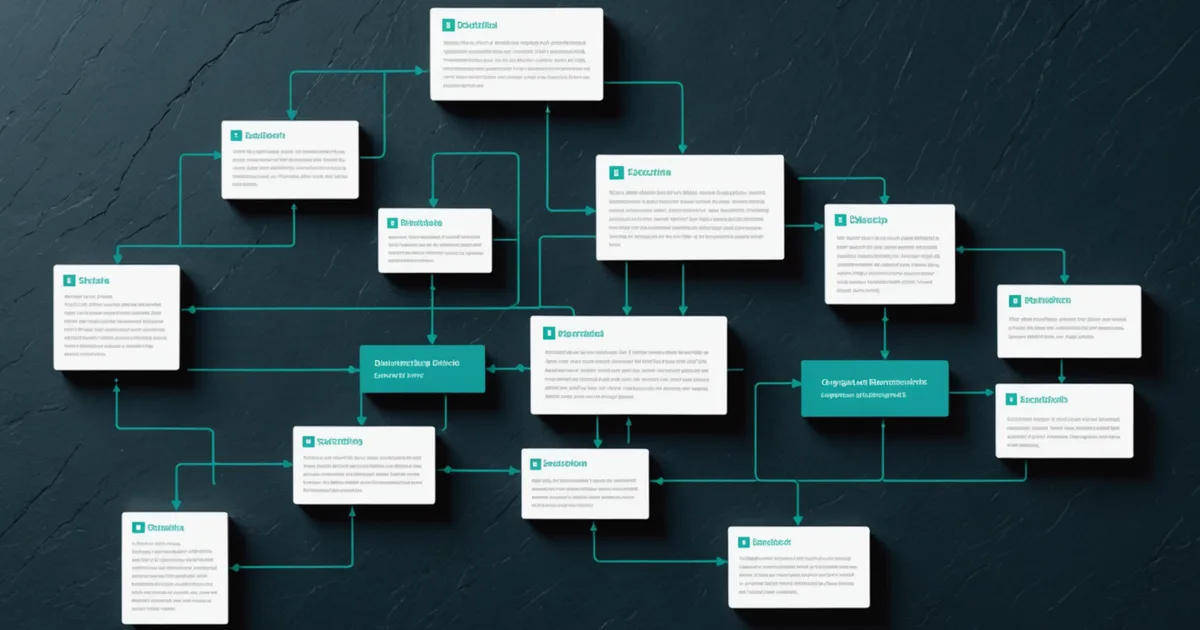
A DICOM SR document consists of a hierarchical tree of content items. Each content item has a concept name (drawn from a controlled vocabulary, usually SNOMED CT or RADLEX codes), a value type (text, code, numeric, spatial coordinates, image reference, etc.), and optionally child items that provide context or elaboration. This is very different from a free-text radiology report: it's designed to be parsed by software, not just read by people.
The standard defines multiple SR templates for different use cases. The TID 1500 Measurement Report template, for example, is designed specifically for quantitative imaging measurements and is widely used for CT volumetrics and PET/CT SUV reporting. TID 2000 is the basic diagnostic imaging report. The CAD SR templates (TID 4100, TID 4200) were specifically designed for computer-aided detection outputs, which makes them historically relevant to AI integration discussions today.
Why AI Systems Generate DICOM SR Objects
When an AI pre-reading system analyzes a chest CT and identifies a 6mm nodule in the right lower lobe, it needs to communicate that finding back into the radiology workflow in a way that is both human-readable and machine-processable. Free text in an HL7 message works for the human-readable part but creates problems for downstream processing: another system trying to extract the measurement, the location, or the confidence level from unstructured text will need natural language processing, which introduces another error surface.
DICOM SR solves this by encoding the finding in a structured format that the PACS, RIS, or dictation system can read directly. The AI system generates a DICOM SR object and pushes it to the PACS alongside the study images. When the radiologist opens the study, the PACS viewer can render the SR findings as annotations, overlays, or a structured report panel, depending on the viewer's SR rendering capabilities.
The SR object also carries provenance: the source system, the algorithm version, the confidence level, and the image references (which specific slice and region the finding refers to). That provenance information is essential for audit purposes and for the radiologist to understand what they're reviewing.
The Gap Between Standard and Practice
DICOM SR has been a standard for over two decades, but PACS rendering of SR objects is inconsistent. Many PACS systems support receiving and storing SR objects but render them poorly or not at all in the primary viewer. The radiologist opens the study, the SR object exists in the system, and there is no visual indication of it in the viewing workspace.
This is a real problem for AI integration. If the AI generates a finding in DICOM SR format and the PACS viewer silently ignores it, the pre-reading layer has done useful work that is invisible to the radiologist. The radiologist reads cold, and the operational value of the pre-read is zero regardless of the model's accuracy.
The practical response to this gap is that most AI pre-reading vendors, including the path we've built at Radivault, use SR as one delivery mechanism alongside HL7 result delivery and dictation system injection. The SR object goes to the PACS for any viewers that do render it and for archival purposes. The same findings also arrive in the dictation system as pre-populated text, which is the path that most radiologists encounter first. The SR is the structured record; the dictation system injection is the operational workflow path.
DICOM SR and Measurement Tracking
The area where DICOM SR is most valuable and most consistently used is longitudinal measurement tracking. When a CT report notes a 6mm pulmonary nodule and references a prior study that noted 4mm, that size comparison ideally lives in structured form, not just in free text that a future reader or system has to parse.
DICOM SR's numeric value type with image reference allows an AI system to encode a measurement with the exact series, instance, and spatial coordinates it was derived from. A PACS with structured measurement tools can then load that reference and reproduce the measurement marker in the correct location on the correct slice. For nodule tracking, for tumor burden assessment in oncology follow-up, and for size-based reporting guidelines (like Fleischner Society criteria for pulmonary nodules), this structured reference is significantly more reliable than text-based measurements that need to be re-found manually on re-read.
We're not saying that free-text measurement reporting is dangerous in routine practice. Most measurements in clinical radiology reports are accurate and findable. But when a finding needs to be tracked across multiple studies over months or years, the difference between a structured measurement reference and "6mm nodule in the right lower lobe" in free text becomes meaningful for the clinical pathway.
RADLEX and the Controlled Vocabulary Question
DICOM SR content items reference controlled vocabulary codes for concept names and code values. For radiology, RADLEX (the Radiological Society of North America's lexicon) is the most commonly used vocabulary for finding descriptions, anatomy, and modifiers.
When an AI system generates an SR object, the concept names it uses for findings need to come from the same vocabulary as the PACS and dictation systems expect. A mismatch creates SR objects that are syntactically valid but semantically mismatched: the PACS receives a finding coded with a RADLEX ID that doesn't exist in its vocabulary mapping and either displays it as raw code text or ignores it.
This vocabulary alignment is a one-time configuration task but requires explicit attention during integration. The AI system's output vocabulary and the receiving PACS's expected vocabulary need to be mapped. For a well-maintained PACS installation running a recent software version, the RADLEX mapping is typically current. For older PACS deployments, vocabulary gaps are common and need to be reviewed during integration planning.
What Structured Reports Enable That Free Text Doesn't
The long-term value of structured report data is in what can be done with it programmatically after the fact. A department that has accumulated five years of DICOM SR structured findings has a dataset that can support quality audits, volume-by-finding-type analysis, measurement consistency review, and (with appropriate governance) model evaluation. The same department with five years of PDF radiology reports has text that requires substantial processing before any of that analysis is possible.
The move toward structured reporting has been slow in radiology partly because free-text dictation is faster for radiologists, partly because report templates in dictation systems are structured at a much coarser level than DICOM SR, and partly because the downstream consumption of structured report data has historically been limited. AI integration is changing the downstream consumption side: a pre-reading system that generates SR objects and a PACS that consumes them creates a feedback loop that is harder to build on free text alone.
The transition is incremental. Most radiology departments will run with hybrid structured/unstructured reporting for the foreseeable future, and that's a workable state. Understanding where SR fits in the integration architecture is the first step to making informed decisions about which parts of the AI workflow to build on structured data and which to route through the dictation layer instead.